
WtE plant maximizes maintenance efficiency and performance – boiler equipped with three P-WAVE generators
Operation of vertical boiler without soot blowers and manual explosion cleaning – successful conversion to P-WAVE generators.
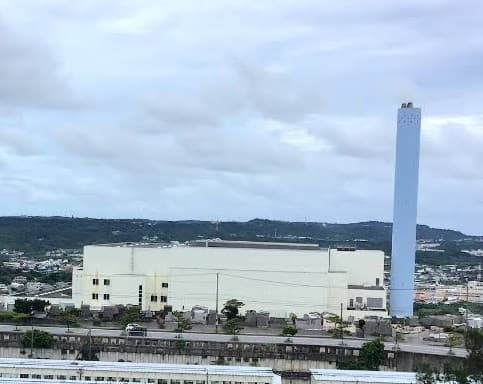
Naha, Okinawa, Japan (JFE Engineering)
About the plant
This waste-to-energy (WtE) plant in Naha, Okinawa serves local municipal waste treatment needs, running three combustion lines with a combined capacity of around 164,000 tonnes of waste a year. The installation was delivered through JFE Engineering Corporation, one of Japan's major industrial engineering firms.
Challenge
The plant's vertical boilers, 5.9 m wide, needed better fouling control at the superheater and economizer to reduce reliance on manual explosion cleaning methods. Another driver was reduced steam consumption and maintenance need for the originally installed steam soot blowers.
P-Wave solution
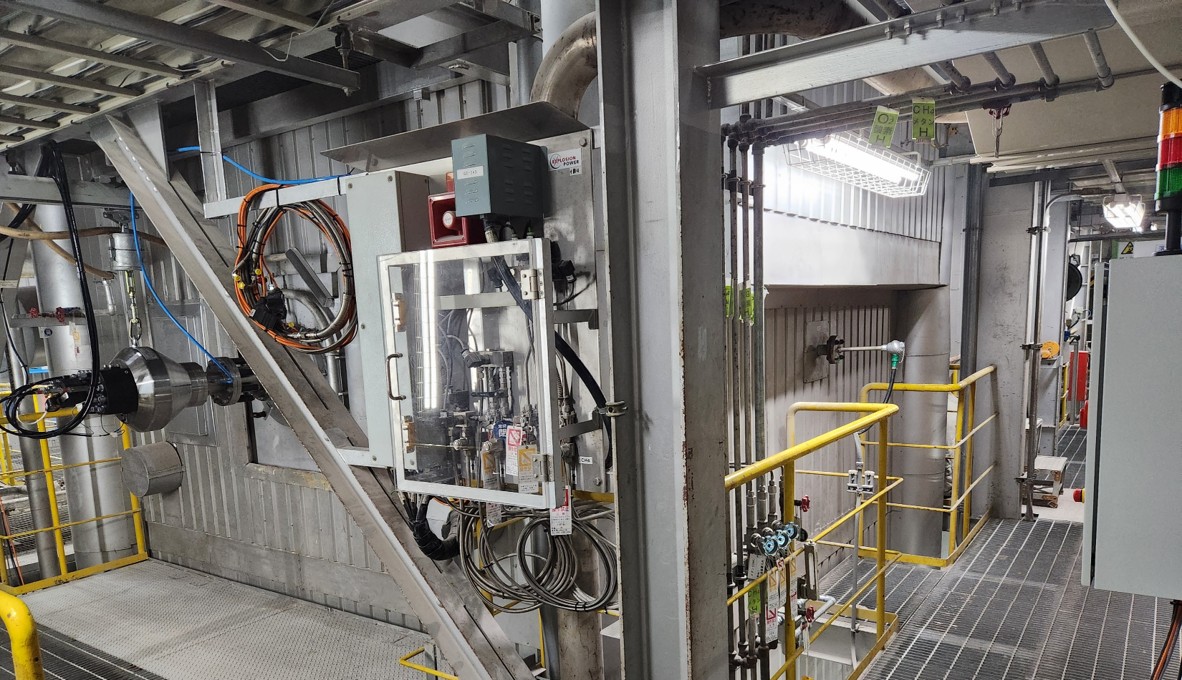
Superheater and economizer cleaning: two units positioned at critical superheater locations and one in the economizer. Three P-WAVE generators were installed, with the first unit commissioned in October 2024 and now approaching two years of continuous operation, making this one of P-WAVE's well-established Asian references.
Boiler scheme: 3rd vertical superheater pass and 4th vertical economizer pass
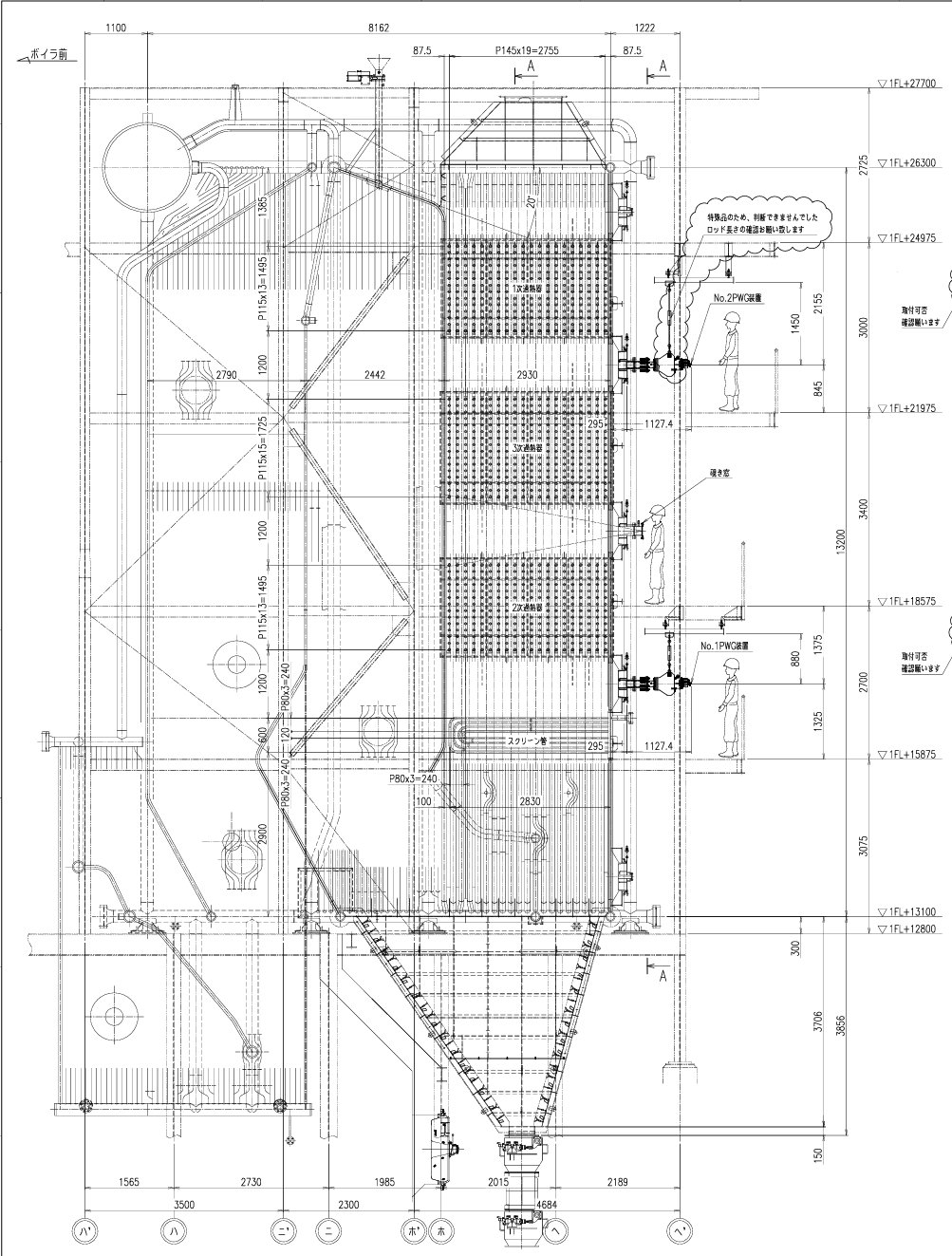
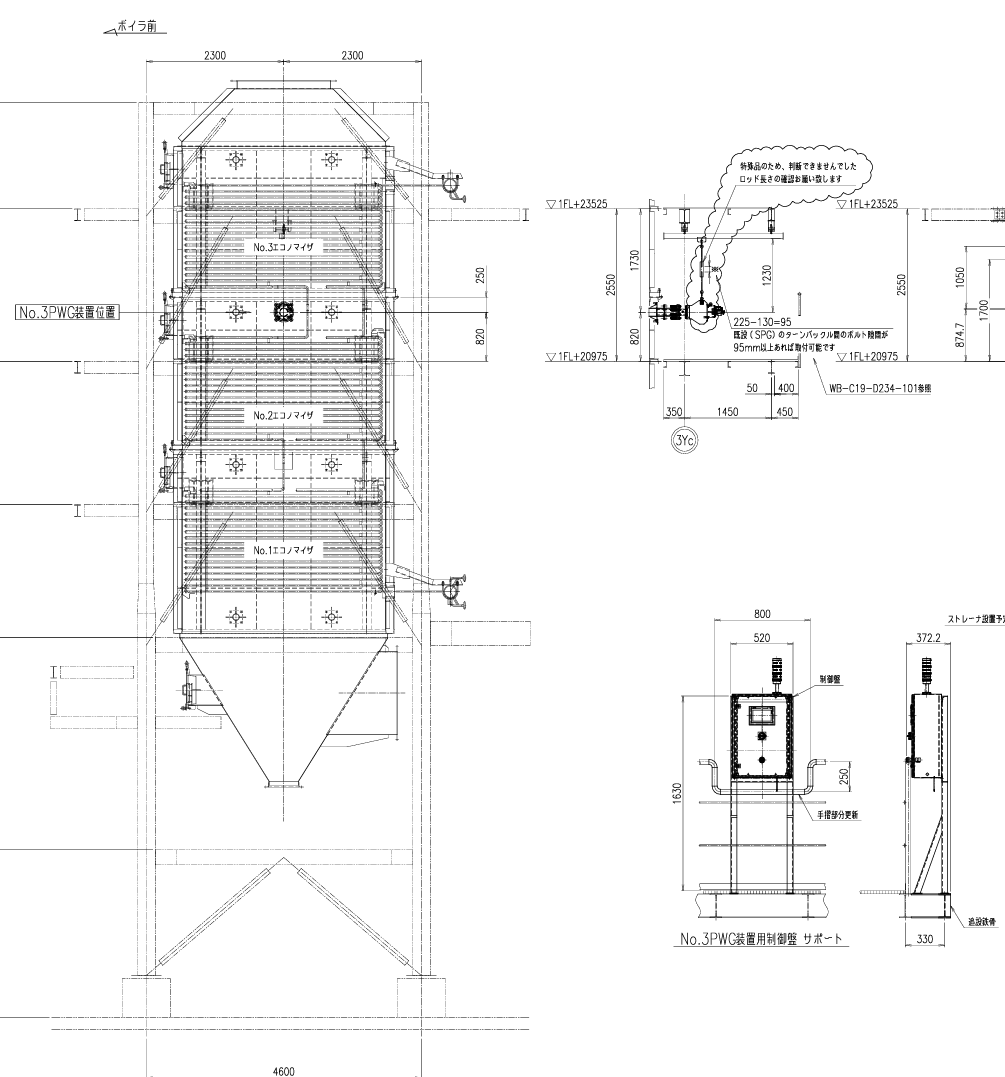
Standardized with online tool FORGE: 3rd vertical superheater pass
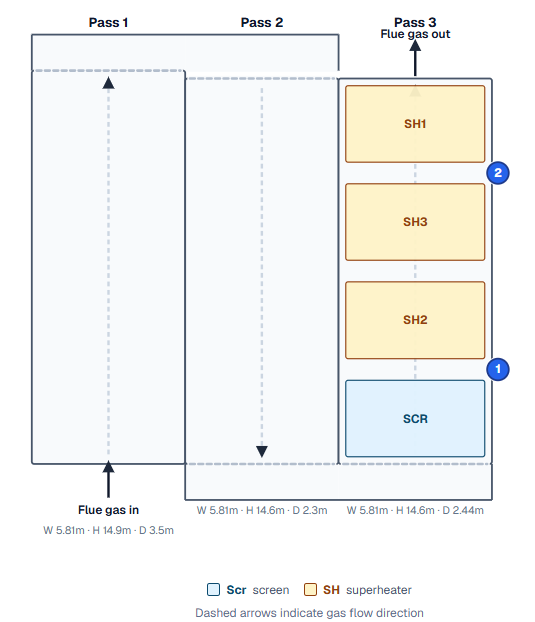
P-WAVE generator installation:
Operation results
Across the three units, the COCKPIT shows over 1,500 blasts fired with a clean-firing rate above 98%, a strong and sustained reliability record across nearly two years of data. The P-WAVE generators produce powerful supersonic pressure waves at 335 bar (every 1.3 hours), 360 bar (every 1.4 hours) and 244 bar (every 1.5 hours).
Extract data from the COCKPIT online-tool (last 90 days):

Customer feedback
JFE Engineering put the system through a full year of demonstration operation before deciding to adopt it, and their own account of that evaluation speaks for itself:
> "Part of that award-winning technology, the pressure wave cleaning system currently widely used in Japan, uses methane gas and oxygen as fuel. However, the PWG pressure wave cleaning system adopted this time uses inexpensive propane gas and compressed air, significantly reducing operating costs. Furthermore, because it does not involve explosions in the pressure wave formation process, it has a simple structure and can handle a wide range of output adjustments with a single model, reducing equipment costs and making it applicable to various boilers. Our company conducted a one-year demonstration operation of this system and confirmed its stable cleaning performance and excellent economic efficiency, so we decided to officially adopt it." > — JFE Engineering
JFE original report: www.jfe-eng.co.jp/news/2026/20260120.html
Encouraged by these strong results, JFE Engineering has since licensed P-WAVE generators for the Japanese and Indian markets and continues to order spare parts and support for the Naha installation as recently as August 2026, nearly two years after commissioning — a clear sign of an active, ongoing partnership.
Interested in P-Wave for your boiler?
Talk to our team about your configuration and cleaning requirements.