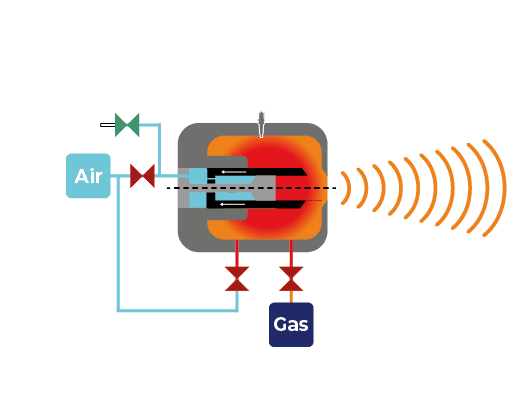
Fully automatic
An alternative to manual explosion cleaning. P-WAVE generators operate fully automatically and integrate into existing plant control systems. Overcome the safety and cost limitations of manual explosion cleaning systems.
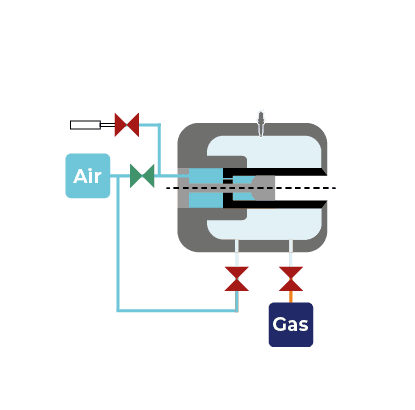
Supersonic pressure waves are generated by combustion of propane with compressed air — no pure oxygen needed. These pressure waves are also called “power wave”, “shock wave” or “shock pulse”.
An alternative to manual explosion cleaning. P-WAVE generators operate fully automatically and integrate into existing plant control systems. Overcome the safety and cost limitations of manual explosion cleaning systems.
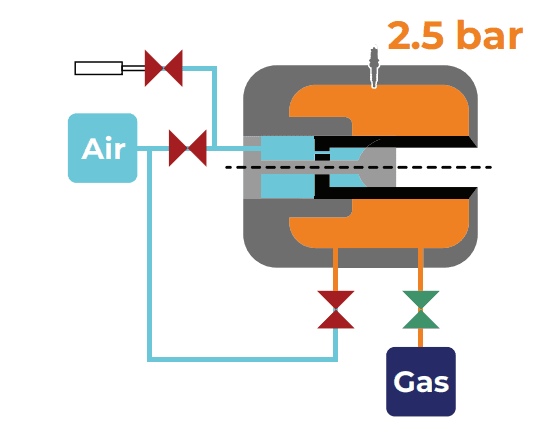
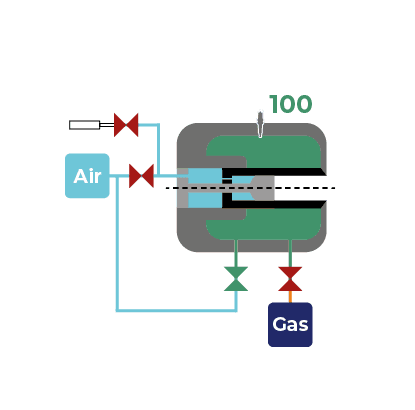
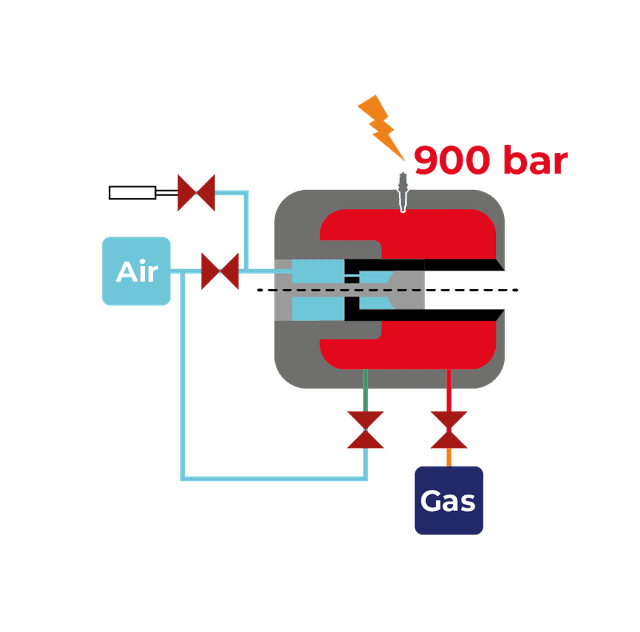
Super-high-pressure is generated by combustion of propane (~20 g/shot) mixed with highly compressed air (100 bar). The supersonic pressure wave is generated by the quick release of the pressure - the expansion of the gases is a separate process step independent of the combustion.
Combustion pressures are typically set between 150 and 600 bar. The generator is designed and certified for 900 bar. Operators can program timing and strength, so cleaning is tuned to actual boiler requirements.
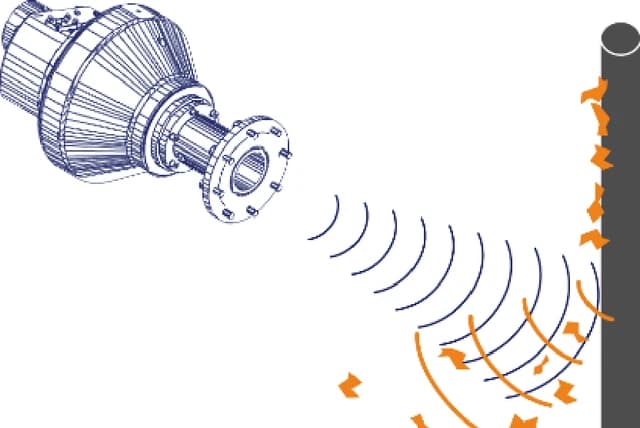
Pressure wave strike the heating surface and reflect, shearing deposits off
Fouling removed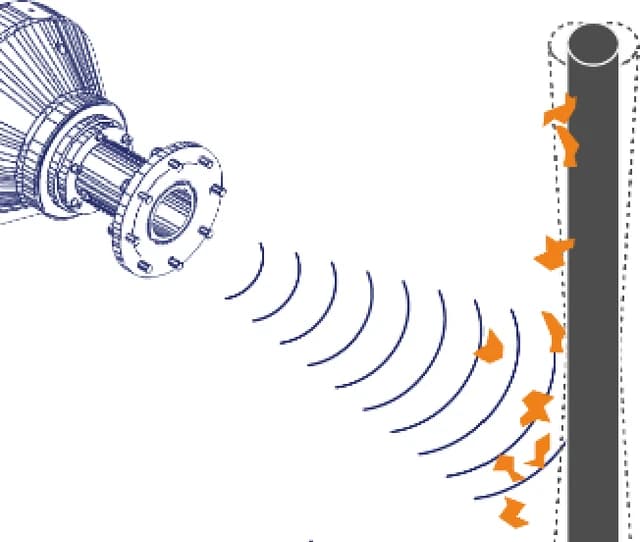
The waves set the tube vibrating, so brittle deposits crack and fall away
Fouling removed